1. Introduction
1.1. Governance Quality and Economic Performance
Governance is a broad and multidimensional notion which has been partially defined for economic management purposes as the manner that governmental authority is employed to oversee its economic and social assets
| [1] | World Bank. (1994). Governance: The World Bank Experience. The World Bank. Washigton, D. C., the United States of America: The World Bank. |
[1]
, and more generally defined as a collection of norms and institutions through which authoritative power is exercised. The role of governance in economic growth began to receive attention only in the 1990’s and was significantly legitimized by the work of Douglass North, which focused on institutions
| [2] | Perkins, D. H., Radelet, S., & Lindauer, D. L. (2006). Economic of Development (6 th ed). New York, the United States of America: W. W. Norton & Company, Inc. |
[2]
. In 1996, the World Bank established a set of World Governance Indicators (WGI) which designed to assess perceptions regarding the standard of governance across different elements of society. These indicators are: voice and accountability, political stability, regulatory quality, government effectiveness, rule of law, and corruption control
| [3] | Kaufmann, D., Kraay, A., & Mastruzzi, M. (2010). The Worldwide Governance Indicators: Methodology and Analytical Issues. Draft Policy Research Working Paper: The World Bank. |
[3]
.
Governance indicators influence economic growth through two main channels. First, better governance enhances the efficiency of both human and physical capital and encourages greater investment in their development, supporting growth according to the Solow model and new growth theory
. Second, based on the social infrastructure hypothesis, effective governance strengthens core institutions and promotes economic growth through favorable government policies that stimulate investments in human and physical capital
.
Moreover, effective governance establishes robust institutions that attract investment, protect property rights, ensure contract enforcement, and generating a stable setting that supports economic activity and fosters innovation. Governance also impacts economic growth through its role in policy implementation and public service delivery, where sound policies foster macroeconomic stability, and efficient services improve access to education, healthcare, and infrastructure, further enhancing human capital and long-term development
.
In governance, the relationship between state authority and institutional strength plays a pivotal role in shaping economic outcomes. The exercise of power by the state is not arbitrary; rather, it is channeled through institutions that either promote or hinder economic progress. A considerable body of research, including influential contributions by underscores that sustainable economic growth relies critically on the existence of robust, inclusive, and resilient institutions
| [6] | North, D. C. (1991). Institutions. The Journal of Economic Perspectives. 5 (1).97-112. |
| [7] | Acemoglu, D., & Robinson, J. A. (2012). Why nations fail: the origin of power, prosperity and poverty. London, the United Kingdom: Profile Books Ltd. |
| [8] | North, D. C., & Thomas, R. P. (1973). The rise of the western world: a new economic history. Cambridge, the United Knigdom: Cambridge university press. |
| [9] | Rodrick, D., & Subramanian, A. (2003). The primacy of institutions (and what this does and does notmean). Finance and Development. 31-34.
https://www.imf.org/external/pubs/ft/fandd/2003/06/pdf/rodrik.pdf |
[6-9]
. Such institutions reinforce the rule of law, safeguarded property rights, and establish frameworks that encourage innovation, secure investments, and ensure the efficient allocation of resources. Without these foundational structures, economic development remains fragile and vulnerable to stagnation or decline. Institutional quality, though not itself one of the World Governance Indicators on which this study centers, is integrally connected to all of the indexes, but especially to regulatory quality, and even more so to the rule of law, and therefore, the linkage between institutions and index and other measures is central to the question of economic growth. Economic growth is the subject of this study, while economic development remains a different and more complex measure. The linkage between economic growth and development is variable in the literature, but generally economic development is the superordinate, and lies outside the scope of this study, which focuses on growth.
1.2. Governance Quality and the Solow Growth Model
The examination of economic growth in Arab countries in this study uses the Solow model and new growth theory as models of growth and as a theoretical framework. The Solow model has been repeatedly linked to governance via institutions, technology, and the relationship between labor productivity and government policy. The new growth approach in general continues the well-established practice and premise of the measurement of growth by GDP and both the Solow model and this general new growth approach demonstrate the validity of the measurement of growth by internal state policy. Rule of law and regulatory quality as central measures herein then pertain to intrastate economic, political, and social policy within a context of constantly increasing productivity. The Solow model relates to these elements of governance and to governance in general in that productivity is a function of investment in education and training, with the state being significantly involved in the allocation of resources for such education. Endogenous growth theories in general, including the Solow model, focus on the connection between policy and knowledge production, and the Solow model has, in terms of predictive applicability and description, withstood the test of time
.
1.3. Governance Quality and Economic Performance in Arab Countries
Across the Arab region, economic growth during the last two decades has been both volatile and underwhelming. This trend was confirmed by a number of works such as Abed (2003), which showed that a deterioration in per capita GDP growth across Arab economics was due to weak governance compared to other emerging regions and which generally identified governance as a significant factor influencing this disparity
| [11] | Abed, G. (2003). Unfulfilled promise: Why the Middle East and North Africa region has lagged in growth and globalization. Finance and Development, 40(1), 10-14. |
[11]
.
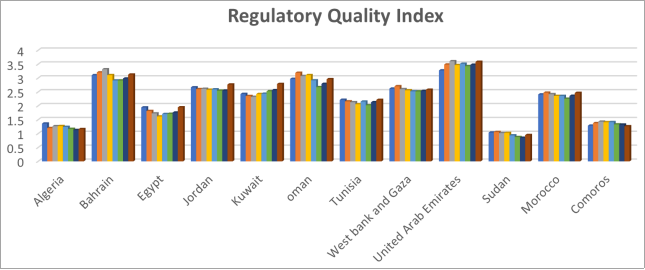
Figure 1. Regularity Quality.
Source: Worldwide governance indicators
https://databank.worldbank.org/source/worldwide-governance-indicators
Source: Worldwide governance indicators
https://databank.worldbank.org/source/worldwide-governance-indicators
According to the Arab Monetary Fund (2020), the economic performance of Arab countries in 2013 was affected by multiple factors. On one hand, growth rates in Arab oil-exporting countries declined, reflecting a decline in oil production in some of these countries. In addition to the impact of the decline in global oil prices and due to a partial result, the gross domestic product (GDP) of Arab countries at current prices reflected limited growth in 2013, rising to approximately $2,734.1 billion in 2013. By 2016, it had declined to $2,347; by 2019, to $2,744 billion; and by 2020, to approximately $2,432 billion
.
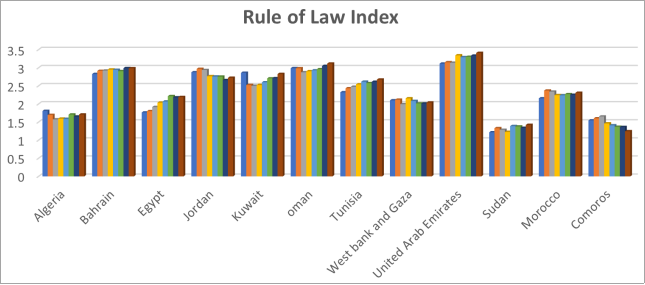
Figure 1 and
Figure 2 show the development in regulatory quality and rule of law indicators in the sample countries from 2013 to 2020. United Arab Emirates recorded the highest scores for both regulatory quality and rule of law in 2013 and 2020, while Sudan had the lowest regulatory quality index score in 2013 and 2020 and the lowest rule of law index score in 2013 while Comoros had the lowest rule of law index score in 2020.
In many Arab nations, governance is undermined by weak institutions that lack transparency and accountability. Corruption is widespread, eroding public trust and deterring both domestic and foreign investment. These challenges hinder policy implementation and create inefficiencies that stifle economic growth. Political instability has been a recurring issue in the Arab world. Disruptions in stability have destabilized economies and diverted resources away from development priorities, creating an environment of uncertainty that discourages investment and innovation
. In addition, many Arab nations rely heavily on oil revenues, and such dependency fosters rent-seeking behavior, further undermining governance
.
Studies examining the influence of governance on economic growth in Arab countries remain notably scarce. This lack of comprehensive studies on the governance-growth nexus in Arab region calls for deeper investigation into the function of governance reforms in fostering economic growth and sustainable economic development. Addressing this gap could yield valuable insights for policymakers aiming to strengthen institutional frameworks and create conducive environments for economic growth across the region.
Accordingly, unlike previous research, this study aims to explain the influence of governance on economic growth exclusively within Arab countries. The study focuses on assessing the extent to which governance influences economic growth in 12 Arab countries over the period from 2013 to 2020. By employing a hybrid growth model and World Bank Governance Indicators, an econometric model is developed, employing the Generalized Method of Moments (GMM) estimation approach, and governance is measured through two key indicators: regulatory quality and rule of law.
This methodological approach allows for a more precise understanding of how specific aspects of governance, particularly regulatory quality and the rule of law, influence economic performance in the Arab region, thereby offering critical insights for policy development and institutional reform.
This study examines the influence of governance on economic growth, and is limited to Arab countries with available data, spanning the period from 2013 to 2020. Although economic growth and governance indicators are accessible from the World Bank database, the lack of governance data in some Arab countries restricted the study to 12 countries. Another limitation is the geographical scope, as the findings are based on a limited number of Arab countries with similar cultural, linguistic, and heritage characteristics. Despite this, the core issue addressed by the study is highly relevant to many developing countries, opening the door for similar studies in other contexts.
Significance and contribution of the study
This study contributes to the existing literature in several important ways. First, it provides one of the few empirical investigations focusing exclusively on Arab countries, a region that remains underrepresented in governance–growth studies. Second, by concentrating on the period 2013–2020, the study captures the post-Arab Spring economic environment, offering insights into governance performance during a phase of structural and institutional adjustment. Third, the use of a dynamic GMM estimator allows the study to address endogeneity concerns and unobserved heterogeneity, thereby providing more robust and reliable estimates. Finally, by isolating regulatory quality and the rule of law, the study offers policy-relevant evidence that can assist Arab policymakers in designing targeted governance reforms to enhance economic growth.
2. Literature Review
2.1. Conceptual Framework
During the 1980’s, governance gained recognition as a critical component of development, and the function of the state in addressing societal challenges such as poverty, corruption, inadequate access to basic services, and political instability was emphasized
. Governance became a focal point for development practitioners seeking to create stable and equitable societies, particularly in regions grappling with systemic socio-economic issues
.
Governance indicators can be divided into two categories: multi-dimensional measures, which a set of several indicators form one-measure, and mono-dimensional measures, which reflect a single dimension of governance
. In this system of measurement, quality of governance refers to advances in WGI indicators as proxy measures. These indicators give information on estimated governance scores across the six aggregate indicators that were mentioned previously
. Composite indicators have estimates ranging from -2.5 to 2.5, with zero as the centre. Corresponding percentiles vary from 0 (lowest) to 100 (highest), with higher positive values indicating greater governance quality
| [19] | Beyene, A. B. (2022). Governance quality and economic growth in Sub-Saharan Africa: the dynamic panel model. Journal of Economic and Administrative Sciences, 40(2), 404-418. https://doi.org/10.1108/JEAS-08-2021-0156 |
[19]
.
In a helpful refinement of the understanding of the use of these measures,
offers a framework for understanding governance through the ideological perspectives of the political right and left. The former perspective prioritizes order, the rule of law, and the institutional conditions necessary for free-market economies to thrive. Governance, from this viewpoint, is crucial for fostering economic stability and is conducive to private-sector development. In contrast, the later perspective emphasizes equity, social justice, and the state's role in protecting vulnerable populations, particularly marginalized groups such as women and low-income communities. These divergent interpretations underscore the complexity of governance, highlighting its multidimensional nature as both an economic and social construct.
Governance has been considered a fundamental pillar in enhancing economic growth within Neoclassical and market economics, and as supporting development pathways in countries through its effective role in ensuring the efficient execution of public policies and the delivery of high-quality public services, thereby enhancing overall economic performance. Numerous studies indicate that governance is indispensable for economic growth, particularly in regions facing systemic instability and corruption
.
The importance of governance is evident in global development frameworks including the Millennium Development Goals (MDGs) and the Sustainable Development Goals (SDGs). These initiatives underscore the role of "good governance" in addressing systemic challenges like inequality, poverty, and limited access to essential services. Good governance is characterized by key principles, including accountability, transparency, inclusivity, and adherence to the rule of law
.
Effective governance constitutes a fundamental driver of economic development by fostering stability, ensuring efficient resource allocation, and promoting public trust. It establishes the institutional framework necessary for investment, innovation, and productivity and a state that has higher-quality institutions in turn more effective and better positioned to manage the effects of globalization
| [21] | Shahnaz, S., Khan, F. A., & Jehan, Z. (2024). Globalization and Conflict in Developing Countries: Role of Institutional Quality. Journal of Economic Cooperation & Development, 45(1), 1-30. |
[21]
.
The conceptual framework for the study fuses the discourses of governance and growth, but understands governance in its emergence as an explanatory variable in relation to growth. The literature specific to this relationship then is somewhat limited in terms of direct expression of the relationship, and governance tends to be explained qualitatively, with its functionality in growth studies often built into or assumed within economic growth models. Since this study concentrated on the particular development of a method and on an econometric contribution to the question of governance–growth nexus, presentation and analysis of the literature focus on empirical studies which contribute to this question, though the qualitative literature which expressly treats governance is growing and may continue to inform economic growth models and enhance the understanding of governance.
2.2. Empirical Studies
Although theoretical models of economic growth like the Solow model and new growth theory can explain economic growth within a certain region, the results of empirical studies are mixed. Furthermore, current growth models cannot fully explain cross-country growth difference
. However, Hall and Jones demonstrated that, in addition to human capital, physical capital, and technological progress, collective infrastructure and institutional quality also play a crucial role in economic growth and are considered as a key factor in economic growth
| [23] | Hall, R. E., & Jones, C. I. (1999). Why do some countries produce so much more output per worker than others. The quarterly journal of economics. 114(1).83-116.
https://doi.org/10.1162/003355399555954 |
[23]
. Most studies on growth and governance have found a reciprocal relationship; thus, providing effective governance also leads to higher institutional quality. The Solow model however implicitly describes the rise in economic growth caused by high institutional quality due to institutions being a primary vehicle of investment in production, and further development of the theory has shown that higher-quality institutions can enhance to good governance by, for example, raising the likelihood that new technologies are able to be adopted
.
Many scholars have been interested in studying the relationship between governance and economic growth worldwide. Such studies have indicated, with some stipulations and exceptions, a positive association between governance and economic growth. However, these results are also measure-dependent with respect to the six World Bank governance indicators, with significant variation across these measures as independent variables. Using the World Bank’s governance indicators and a sample of 91 countries, Siddique, et al
| [25] | Siddique, H. M., Nawaz, A., & Majeed, M. T. (2016). The impact of institutional governance on economic growth: a panel data analysis. Bulletin of Business and Economics (BBE), 5(4), 210-219. https://doi.org/10.61506/ |
[25]
found, through the lens of new growth theory and with GMM estimation, that institutional governance, considered as a grouping of the World Bank measures, exerted a significant positive effect on economic growth. Cooray
examined the role of government on economic growth by focusing both the size and effectiveness of governments in 71 developed, developing, and transitional countries from 1996 to 2003. The study also used the GMM estimation approach and concluded that the relationship between government expenditure and governance strongly suggests that the efficient use of government spending can improve the governance quality, which, in turn, contributes to greater economic growth. Huynh & Jacho-Chávez
investigated the empirical relationship between governance and economic growth by employing nonparametric methods for 125 countries in five global regions—Western Europe & Offshoots, Eastern Europe & Offshoots, Latin America & the Caribbean, Asia, and Africa—over the period 1996–2006. The findings of the study showed that only three indicators of the six world governance indicators - namely, rule of law, political stability, and voice and accountability were significantly and positively correlation with economic growth, whereas regulatory control, government effectiveness, and control of corruption were statistically insignificant, These findings highlight considerable variation in the effects across different indicators, regions, and time periods.
Lahouij
| [28] | Lahouij, H. (2017). Governance and economic growth in developing economies: A comparative study. |
[28]
examined the effects of governance and other growth determinants on the economic growth of 110 developing countries, categorized by income level, over the period 2002-2014 by using panel GMM estimation technique, fixed and random effect. The study indicated that governance exerts a significantly positive influence on economic development across developing countries, irrespective of income level. Furthermore, it found that political stability, government effectiveness, regulatory quality, and control of corruption significantly and positively affect the economic development of lower-middle-income countries, whereas voice and accountability, political stability, and rule of law exhibit a significant positive relationship with low-income economies. Additionally, the study revealed that voice and accountability, government effectiveness, regulatory quality, and rule of law are strongly and positively correlated with economic growth in upper-middle-income countries.
Han, et al
| [29] | Han, X., Khan, H. A., & Zhuang, J. (2014). Do governance indicators explain development performance? A cross-country analysis. Asian Development Bank Economics Working Paper Series, (417). https://dx.doi.org/10.2139/ssrn.2558894 |
[29]
analyzed the development performance by using governance indicators over the period 1998–2011 for 215 countries from Developing Asia, the Middle Income European Countries, Latin America and the Caribbean, the Middle East and North Africa, the high-income organization for Economic Cooperation and Development (OECD) countries, and Sub-Saharan Africa by using principal component analysis, fixed effect model, and GMM estimation technique, and the results showed that all the six governance indicators exert a significant and positive impact on both annual growth rate and GDP per capita.
Zhuo, et al
| [30] | Zhuo, Z., Muhammad, B., & Khan, S. (2021). Underlying the relationship between governance and economic growth in developed countries. Journal of the Knowledge Economy, 12, 1314-1330. https://doi.org/10.1007/s13132-020-00658-w |
[30]
specifically examined the effects of governance on growth in developed countries, looking at six indicators in 31 developed nations for the period 2002 to 2018 by using GMM and system generalized method of moments (Sys GMM), pooled OLS, fixed effect, and random effect. The study indicated a significant direct impact of rule of law, control of corruption, and voice and accountability on the economic growth of developed countries. Additionally, the study revealed a significant indirect impact of government effectiveness, political stability, and regulatory quality, where a 1% increase in any of these indicators being associated with a reduction in economic growth. These findings clearly highlight the critical role of governance indicators in enhancing the economic performance of developed countries. It should be noted that ‘regulatory quality’ as a World Bank measure measures, here as elsewhere, means a lack of governmental intervention in economies as higher quality regulation, and in turn governance, and this negative definition may be significant for the negative correlation found here.
Bayar
| [31] | Bayar, Y. (2016). Public governance and economic growth in the transitional economies of the European Union. Transylvanian Review of Administrative Sciences, 12(48), 5-18. |
[31]
explained how public governance indicators affected economic growth in the transitional economies of the European Union between 2002 and 2013 by using static panel analysis, and the findings revealed that all governance indicators, with the exception of regulatory quality, had a statistically significant positive impact on economic growth. Additionally, the findings demonstrated that political stability had the least influence on economic growth, while the rule of law and corruption control had the most.
Numerous studies have focused on the relationship between governance and economic growth in developing nations worldwide such as Habtamu
investigated the effects of governance on economic growth across 35 Sub-Saharan African (SSA) countries from 1996 to 2005 by using difference and GMM estimation technique, and the study found that rule of law, government effectiveness, regulatory quality, political instability, and voice and accountability all have positive and highly significant effect on SSA economic growth, but that control of corruption has no effects on economic growth in the sub-continent. Additionally, using stochastic frontier analysis, the study indicated that only two governance factors—regulatory quality and government effectiveness—significantly effected technological efficiency.
In addition, Beyene
| [19] | Beyene, A. B. (2022). Governance quality and economic growth in Sub-Saharan Africa: the dynamic panel model. Journal of Economic and Administrative Sciences, 40(2), 404-418. https://doi.org/10.1108/JEAS-08-2021-0156 |
[19]
analyzed the role of governance quality in affecting the economic growth in 22 Sub-Saharan African (SSA) countries over the period 2002-2020 by using GMM estimation technique and the study revealed that the composite governance index exerts a significant positive influence on economic growth, with a one-unit improvement in the aggregate governance index corresponding to a 3.05% increase in GDP. Disaggregated results indicated that control of corruption and government effectiveness had a significant negative effect on growth performance, whereas rule of law and regulatory quality exhibited a significant positive influence. Political stability, voice, and accountability were found to have an insignificant impact on economic growth.
Further, Omoteso & Ishola Mobolaji
| [33] | Omoteso, K., & Ishola Mobolaji, H. (2014). Corruption, governance and economic growth in Sub-Saharan Africa: a need for the prioritisation of reform policies. Social Responsibility Journal, 10(2), 316-330.
https://doi.org/10.1108/SRJ-06-2012-0067 |
[33]
investigated the effects of governance indices, particularly control of corruption on economic growth in 47 SSA countries from 2002 to 2009. Utilizing a panel data framework along with fixed effect, and the random effect, the study discovered that political stability and regulatory quality positively influenced regional economic growth, but government effectiveness has a negative effect. The study also discovered that implementing voice accountability, and rule of law indicators concurrently had a positive effect on regional economic growth.
As to Asia, Huang & Ho
used a frequency domain approach to evaluate if a Granger causation between governance and economic growth existed in 12 Asian countries classified as "Free," "Partly Free," and "Not Free", from 1996 to 2014. The findings showed that except for South Korea, "Free" nations showed no substantial causation between most governance aspects and economic development. In "Partly Free" countries, apart from Indonesia and Thailand, economic growth was primarily influenced by the rule of law. In "Not Free" countries, a significant causal relationship was observed between most governance attributes, particularly government effectiveness and rule of law, and economic growth.
Bhattacharjee
| [35] | Bhattacharjee, J. (2017). Do institutions affect economic growth? An empirical analysis of selected south Asian countries. Asian Journal of Comparative Politics, 2(3), 243–260.
https://doi.org/10.1177/2057891116671833 |
[35]
investigated the effect of institutions on economic growth in four key South Asian countries from 1996 to 2014 by employing the panel autoregressive distributed lag (ARDL) technique and vector autoregression (VAR) models and found a positive relationship between voice and accountability, regulatory quality, and economic growth. However, the rule of law and government effectiveness exert a negative effect on economic growth in South Asian countries.
Nawaz, et al
| [36] | Nawaz, S., Iqbal, N., & Khan, M. A. (2014). The impact of institutional quality on economic growth: Panel evidence. The Pakistan Development Review, 53, 15–31.
https://doi.org/10.30541/v53i1pp.15-31 |
[36]
investigated the effect of institutional quality on economic growth by using 35 Asian nations from 1996 to 2012 categorizing them as developed or developing. The study employed GMM system both static and dynamic. The empirical findings underscore how institutions are important in determining long-term economic growth in Asian economies. However, the effect of institutions varies according to the level of economic development, with institutions being more effective in promoting growth in developed Asian countries than in developing counterparts. This suggests that tailored institutional frameworks are required to support sustainable economic growth in different national contexts.
However, Asongu
| [37] | Asongu, S. A. (2016). Determinants of growth in fast-developing countries: Evidence from bundling and unbundling institutions. Politics & Policy, 44(1), 97–134.
https://doi.org/10.1111/polp.12148 |
[37]
explained growth factors from 2001 to 2011 in nine countries, four MINT members (Mexico, Indonesia, Nigeria and Turkey) and five BRICS members (Brazil, Russia, India, China and South Africa). The study focused on the bundling and unbundling of ten governance dimensions by using both contemporary and non-contemporary fixed and random effects regressions. The results showed that first, governance exhibits a stronger positive significance in non-contemporary regression specifications compared to contemporary ones. second, that there is some intriguing data supporting the variability of political governance is a factor in growth; third, that other governance factors had a greater impact on actual GDP production than GDP growth; and fourth, economic governance aspects have the most beneficial influence on actual GDP production, but are adversely significant in noncontemporary regressions for GDP growth.
Beyond that, Kesar, et al
| [38] | Kesar, A., Jena, P. K., & Bandi, K. (2020). Economic growth, corruption, political stability and trade openness interaction in BRICS: A panelARDL approach. The Journal of Income and Wealth, 42(1), 113–127. |
[38]
examined the influence of the governance index and gross fixed capital formation on the economic growth of BRICS countries by employing annual data from 2002 to 2019. This study used the Fixed Effect Model, Driscoll and Kraay standard error with fixed effect, FMOLS, Dynamic Ordinary Least Squares (DOLS) method, and the Panel Dumitrescu Hurlin Causality test. The variables were separated into two models: model I considers the influence of the governance index (jointly) on economic growth, while model II explores the effect of the governance index on economic growth for each element of the index. The results show that the governance index, gross fixed capital formation, population, control of corruption, and governance effectiveness all have a positive and significant impact on economic growth. However, regulatory quality has a large and detrimental influence on economic growth. This finding however, might be explained by other research Turrey, et al
| [39] | Turrey, Aijaz Ahmad & Maqbool, Tajamul. (2018). Relationship between economic growth and poverty: A study of developing and less developed countries. Towards Excellence, 10. 51-57. |
[39]
which shows significant variation in the impacts of economic growth on poverty reduction in India and China, respectively.
Empirical studies that cover Arab countries separately are very rare. AlAdlani
explained the linkage between governance and economic growth in 22 the Arab countries during the period 1996-2017 by employing analytical techniques including descriptive analysis and panel data regressions and the study revealed that voice and accountability had a positive association with economic growth in low-income economies but a negative association in high-income economies. Conversely, other governance indicators exhibited negative effects in low-income economies and positive effects in high-income economies. Arab countries were however included in several comprehensive studies. In addition to Siddique, et al
| [25] | Siddique, H. M., Nawaz, A., & Majeed, M. T. (2016). The impact of institutional governance on economic growth: a panel data analysis. Bulletin of Business and Economics (BBE), 5(4), 210-219. https://doi.org/10.61506/ |
[25]
, which included many Arab countries in a general examination, Samarasinghe
study did include Arab countries in a large worldwide sample, and also did provide a brief and limited Arab country- specific analysis.
Emara and Jhonsa
| [40] | Emara, N., & Jhonsa, E. (2014). Governance and economic growth: The case of Middle East and north African countries. Journal of Development and Economic Policies, 16(1), 47–71. https://ssrn.com/abstract=3810359 |
[40]
explained the effect of the improvement in governance quality on per capita income as well as the influence of increase in per capita income on governance quality across 197 countries with a focus on 22 Middle East and North Africa (MENA) countries by employing Two-stage Least Square (TSLS) regression for the year 2009 and the findings indicated that the majority of MENA areas have poor economic development that is not accompanied by sound growth. This aligns with Emara & Chiu
| [41] | Emara, N., & Chiu, I. M. (2016). The impact of governance environment on economic growth: The case of middle eastern and north African countries., Journal of Economics Library, 3(1), 24–37. https://ssrn.com/abstract=3810284 |
[41]
who explained the effect of governance on economic growth in 188 countries with special concentration on 21 MENA countries for the years 2009 and 2013. Using Principal Components Analysis (PCA), the "composite governance index" of six world governance indicators was constructed. The study indicated that a one-unit increase in the composite governance index corresponds to a 2% rise in GDP per capita, and a five-unit increase could potentially double a country’s growth rate within seven years, according to marginal estimates.
Finally, Abdelbary and Benhin
investigated the impact of governance on economic growth and human capital over the period 1995-2014 across 97 countries including 19 countries from the Arab Region and with a specific focus on and analysis of Arab countries. The study employed Pooled OLS, fixed effects and random effects and indicated that governance exerts a positive influence on both human capital development and economic growth.
The positive and significant impact of regulatory quality and rule of law on economic growth in Arab countries is consistent with the findings of Huynh and Jacho-Chávez
, Bayar
| [31] | Bayar, Y. (2016). Public governance and economic growth in the transitional economies of the European Union. Transylvanian Review of Administrative Sciences, 12(48), 5-18. |
[31]
, Beyene
| [19] | Beyene, A. B. (2022). Governance quality and economic growth in Sub-Saharan Africa: the dynamic panel model. Journal of Economic and Administrative Sciences, 40(2), 404-418. https://doi.org/10.1108/JEAS-08-2021-0156 |
[19]
, and Zhuo, et al
| [30] | Zhuo, Z., Muhammad, B., & Khan, S. (2021). Underlying the relationship between governance and economic growth in developed countries. Journal of the Knowledge Economy, 12, 1314-1330. https://doi.org/10.1007/s13132-020-00658-w |
[30]
, all of whom discovered that these dimensions of governance are key drivers of economic growth across different regions and income levels. Similarly, Emara and Chiu
| [41] | Emara, N., & Chiu, I. M. (2016). The impact of governance environment on economic growth: The case of middle eastern and north African countries., Journal of Economics Library, 3(1), 24–37. https://ssrn.com/abstract=3810284 |
[41]
demonstrated that gains in the composite governance index, which incorporates regulatory quality and rule of law, result in higher per capita income in MENA nations. However, the findings differ from those of Habtamu
and Omoteso and Ishola Mobolaji
| [33] | Omoteso, K., & Ishola Mobolaji, H. (2014). Corruption, governance and economic growth in Sub-Saharan Africa: a need for the prioritisation of reform policies. Social Responsibility Journal, 10(2), 316-330.
https://doi.org/10.1108/SRJ-06-2012-0067 |
[33]
, who discovered that certain governance dimensions, such as corruption control or political stability, have bigger or more consistent effects on economic growth than regulatory quality and rule of law. This disparity could be attributed to structural and institutional disparities between Sub-Saharan Africa countries and the Arab area, as well as discrepancies in government objectives and policy implementation.
3. Methodology, Data and, Estimation Technique
3.1. Methodology
This study investigates the impact of governance on economic growth, employing a conceptual framework adapted from Dawson
, Hall, et al
, and Abdelbary & Benhin
which is itself grounded in the Solow growth model
.
Consider the following Cobb-Douglas production function, which demonstrates constant returns to scale while exhibiting diminishing return with respect to each individual input factor,
(1)
where Y
it represents the real output produced by country i at time t, K
it denotes physical capital, L
it the labor force, and H
it human capital. The term A
it, commonly referred to as Total Factor Productivity (TFP) or Multifactor Productivity (MFP), is intended to capture a range of factors affecting the overall efficiency of the economy. According to Mankiw et al.
| [44] | Mankiw, N. G., Romer, D., & Weil, D. N. (1992). A contribution to the empirics of economic growth. The Quarterly Journal of Economics, 107, 407–437. https://doi.org/10.2307/2118477 |
[44]
, A
it encompasses not only the technological level but also other determinants such as resource endowments, quality of management, governance index, climate, institutional strength, property rights, and cultural factors—the inclusion of institutional factors is specifically highlighted by Campos and Nugent
. Dividing the production function by L
it yields the per capita income function, as expressed in Eq. (2) in per worker terms.
According to Solow
and Dawson
A
it refers to the level of technology, and for Mankiw, et al
| [44] | Mankiw, N. G., Romer, D., & Weil, D. N. (1992). A contribution to the empirics of economic growth. The Quarterly Journal of Economics, 107, 407–437. https://doi.org/10.2307/2118477 |
[44]
, Campos & Nugent
, and Abdelbary & Benhin
, A
it reflects not just level of technology but it also includes the quality of institutions as following:
Then
I1-𝛂-𝛃,(4)
After taking the natural log from equation (4):
Log Y=𝛂Log K +𝛃Log H + (1-𝛂–𝛃) Log Iit(5)
The study adopts equation (5) as its core analytical framework, incorporating physical capital, human capital, and the governance indicator as independent variables. Upon including additional explanatory variables that may influence economic growth, the equation is extended as follows:
Log Y=𝛂Log K +𝛃1Log H +𝛃2Log I +𝛃3Log Z(6)
Where Z is trade openness, another explanatory variable that can affect economic growth,
Log Y=𝛂Log K +𝛃1Log H +𝛃2Log I +𝛃3Log Openit+Uit(7)
Here, Y denotes the logarithm of GDP per capita, K represents the logarithm of gross capital formation, H indicates the logarithm of primary school enrolment, and I correspond to the logarithm of regulatory quality and rule of law, serving as proxies for institutional quality. Additionally, Openit represents the logarithm of the trade openness indicator, included as another explanatory variable expected to exert a positive influence on economic growth.
3.2. Data
To explain the impact of governance on economic growth, the study employes a panel data model for 12 Arab countries over the period 2013 to 2020 (see
table 1 for the sample of countries in the study). Countries were chosen based on availability of data. The study relies on secondary data obtained from the World Bank.
Table 2 presents a description of the variables used in the analysis, including their data sources and corresponding abbreviations.
Table 3 provides descriptive statistics for all variables, reporting the mean, median, standard deviation, minimum and maximum values, and the total number of observations.
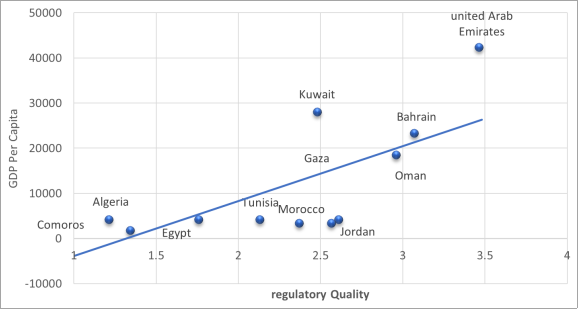
Figure 3 illustrates a positive relationship between regulatory quality and economic growth, while
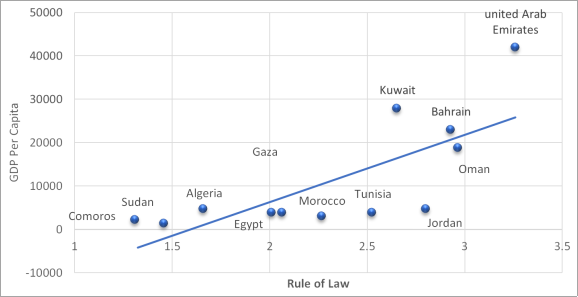
Figure 4 demonstrates a positive association between the rule of law and economic growth.
Following Samarasinghe
, and Lahouij
| [28] | Lahouij, H. (2017). Governance and economic growth in developing economies: A comparative study. |
[28]
the dependent variable, GDP per capita Log (GDP) is used as a proxy for economic growth. And gross capital formation as a proxy for physical capital. Following Odhiambo
, Beyene
| [19] | Beyene, A. B. (2022). Governance quality and economic growth in Sub-Saharan Africa: the dynamic panel model. Journal of Economic and Administrative Sciences, 40(2), 404-418. https://doi.org/10.1108/JEAS-08-2021-0156 |
[19]
and AlAdlani
, Education has been widely recognized by both neoclassical and endogenous growth theories as a key driver of economic growth. As discussed in the literature review, the impact of education on economic growth has been measured using a variety of indicators. While some studies employ composite or aggregate measures of human capital, others focus specifically on school enrollment rates at particular levels of education to capture the contribution of educational attainment to economic performance, the study uses primary school enrollment as a proxy for human capital. Following Han, et al
| [29] | Han, X., Khan, H. A., & Zhuang, J. (2014). Do governance indicators explain development performance? A cross-country analysis. Asian Development Bank Economics Working Paper Series, (417). https://dx.doi.org/10.2139/ssrn.2558894 |
[29]
, Emara and Chiu
| [41] | Emara, N., & Chiu, I. M. (2016). The impact of governance environment on economic growth: The case of middle eastern and north African countries., Journal of Economics Library, 3(1), 24–37. https://ssrn.com/abstract=3810284 |
[41]
, Singh
, and Beyene
| [19] | Beyene, A. B. (2022). Governance quality and economic growth in Sub-Saharan Africa: the dynamic panel model. Journal of Economic and Administrative Sciences, 40(2), 404-418. https://doi.org/10.1108/JEAS-08-2021-0156 |
[19]
, the study uses regulatory quality and rule of law as proxies for governance. Following Beyene
| [19] | Beyene, A. B. (2022). Governance quality and economic growth in Sub-Saharan Africa: the dynamic panel model. Journal of Economic and Administrative Sciences, 40(2), 404-418. https://doi.org/10.1108/JEAS-08-2021-0156 |
[19]
, Samarasinghe
, and Lahouij
| [28] | Lahouij, H. (2017). Governance and economic growth in developing economies: A comparative study. |
[28]
, the study uses a trade openness indicator, which is expected to have a positive effect economic growth.
Table 1. List of the Arab Countries Included in the Study.
Algeria | Jordan | Sudan |
Bahrain | Kuwait | Tunisia |
Comoros | Morocco | United Arab Emirates |
Egypt | Oman | West Bank and Gaza |
Table 2. Description of Dependent and Independent Variables.
Variables | Description |
GDP (Dependent Variable) | GDP per capita is defined as the gross domestic product divided by the midyear population. GDP represents the total gross value added by all resident producers in the economy, plus any product taxes, minus any subsidies not included in the product values. The data are expressed in constant 2015 U.S. dollars. |
GCAPF | Gross capital formation (formerly gross domestic investment) comprises expenditures on additions to the economy’s fixed assets, along with net changes in inventory levels. Gross capital formation (formerly gross domestic investment) consists of outlays on additions to the fixed assets of the economy plus net changes in the level of inventories. |
PE | Gross primary enrollment ratio refers to the ratio of total enrollment, irrespective of age, to the population of the age group officially corresponding to the specified education level. |
Open | Trade openness is measured as the sum of exports and imports of goods and services expressed as a share of GDP. |
RQ | Regulatory Quality reflects perceptions of the government’s ability to design and implement effective policies and regulations that facilitate and encourage private sector development. |
RL | Rule of Law captures perceptions regarding the extent to which agents have confidence in and adhere to societal rules, particularly the quality of contract enforcement, property rights, policing, and judicial systems, as well as the likelihood of crime and violence. The standard normal distribution for this measure ranges from -2.5 to 2.5. |
Source: World development indicators and worldwide governance indicators
https://databank.worldbank.org/source/world-development-indicators
https://databank.worldbank.org/source/worldwide-governance-indicators
3.3. Estimation Technique
To examine the impact of governance on economic growth using panel data from 12 Arab countries, the study employs a dynamic GMM estimator to address the endogeneity problem, as GMM is considered the appropriate estimation technique for dynamic panel models and, according to Roodman
the GMM estimation approach, as developed by Arellano & Bond
| [49] | Arellano, M., & Bond, S. (1991). Some tests of specification for panel data: Monte Carlo evidence and an application to employment equations. The review of economic studies, 58(2), 277-297. https://doi.org/10.2307/2297968 |
[49]
, and Arellano & Bover
is suitable for dynamic panel estimation. For panel data, GMM estimators have three distinct advantages over other estimators. First, GMM estimators are more efficient than Pooled OLS or 2SLS estimators due to their ability to handle serial correlation and heteroskedasticity Söderbom
| [51] | Söderbom, M. (2009). Applied econometrics lecture 2: Instrumental variables, 2SLS and GMM. Retrieved June, 30, 2014. |
[51]
. Second, GMM estimators use regression differences or instruments to capture unobserved effects, avoiding omitted variable bias. Third, this method avoids endogeneity by utilizing internal instruments with lag between dependent and explanatory variables.
Table 3. Descriptive Statistics: GDP, GCAPF, PE, RQ, RL, and Open.
Variables | Mean | Median | St. Dev | Minimum | Maximum | Obs |
Log (GDP) ($) | 8.735 | 8.282 | 1.087 | 7.187 | 10.687 | 96 |
Log (GCAPF) (%) | 3.207 | 3.230 | 0.365 | 2.472 | 3.927 | 96 |
Log (PE) (% gross) | 4.607 | 4.643 | 0.131 | 4.276 | 4.783 | 96 |
Log (RQ) | 0.744 | 0.883 | 0.389 | -0.165 | 1.282 | 96 |
Log (RL) | 0.806 | 0.856 | 0.288 | 0.196 | 1.226 | 96 |
Log (Open) (%) | 4.077 | 4.423 | 1.177 | -0.242 | 5.256 | 96 |
Figure 3. Regulatory Quality and Economic Growth.
Source: World development indicators and worldwide governance indicators
https://databank.worldbank.org/source/world-development-indicators
https://databank.worldbank.org/source/worldwide-governance-indicators
Figure 4. Rule of Law and Economic Growth.
Source: World development indicators and worldwide governance indicators
https://databank.worldbank.org/source/world-development-indicators
https://databank.worldbank.org/source/worldwide-governance-indicators
4. Empirical Discussion
Table 4 presents the results of the dynamic GMM for the selected sample of Arab countries. The regression model is estimated in 5 steps. Column (1) reports a basic model in which GDP per capita using as a proxy for economic growth – as a function of Log (GCAPF) and Log (PE). Results in column (1) indicate that Log (GCAPF) contributes with 0.182 in economic growth in the selected sample and exhibits a positive and statistically significant relationship at the 5% level, consistent with as theoretical expectations. Holding other variables constant, a 1% increase in Log (GCAPF) is associated with a 0.182% increase in economic growth. These results are consistent with Samarasinghe
, and Lahouij
| [28] | Lahouij, H. (2017). Governance and economic growth in developing economies: A comparative study. |
[28]
. Results in column (1) also show that Log (PE) correlates positively but insignificantly correlated with economic growth in all steps of the model, meaning that a 1% increase in Log (PE) leads to a 0.052% decrease in economic growth. This result consistent with Odhiambo
, and Beyene
| [19] | Beyene, A. B. (2022). Governance quality and economic growth in Sub-Saharan Africa: the dynamic panel model. Journal of Economic and Administrative Sciences, 40(2), 404-418. https://doi.org/10.1108/JEAS-08-2021-0156 |
[19]
.
In column (2) Log (RQ) is added to the regression model which is used as a first proxy for governance. Thus, log (GDP) becomes a function of Log (GCAPF), Log (PE), and Log (RQ). The estimated coefficient of Log (RQ) is 0.182 (significant at 10% level), indicating that a 1% increase in regulatory quality leads to 0.182% rise in economic growth. In addition, the estimated coefficients of Log (GCAPF) and Log (PE) are 0.203 and 0.074, respectively. These results are consistent with Han, et al
| [29] | Han, X., Khan, H. A., & Zhuang, J. (2014). Do governance indicators explain development performance? A cross-country analysis. Asian Development Bank Economics Working Paper Series, (417). https://dx.doi.org/10.2139/ssrn.2558894 |
[29]
, Beyene
| [19] | Beyene, A. B. (2022). Governance quality and economic growth in Sub-Saharan Africa: the dynamic panel model. Journal of Economic and Administrative Sciences, 40(2), 404-418. https://doi.org/10.1108/JEAS-08-2021-0156 |
[19]
, and Lahouij
| [28] | Lahouij, H. (2017). Governance and economic growth in developing economies: A comparative study. |
[28]
.
In column (3) trade openness is added to the equation. The results indicate that the estimated coefficient of Log (Open) is 0.094 and it is positive and significant at 10% level which means that 1% increase in Log (Open) causes economic growth to rise by 0.094%. In addition, the results in column (3) indicate that, the estimated coefficient of Log (GCAPF) is 0.175, Log (PE) is 0.214 and, Log (RQ) is 0.220. These results are consistent with Beyene
| [19] | Beyene, A. B. (2022). Governance quality and economic growth in Sub-Saharan Africa: the dynamic panel model. Journal of Economic and Administrative Sciences, 40(2), 404-418. https://doi.org/10.1108/JEAS-08-2021-0156 |
[19]
, and Azam
.
Column (4) shows the rule of law index which is used as a second proxy for governance in the equation. The model is estimated by using Log (GDP) as a dependent variable, Log (GCAPF), Log (PE) and Log (RL) as independent variables. The results indicate that the governance index has a positive and significant effect on economic growth. The parameter of Log (RL) is 0.321 (significant 10%). Also, the results in column (3) show that, the estimated coefficient of Log (GCAPF) is 0.207 and, Log (PE) is -0.196. These findings are consistent with Cooray
, Han, et al
| [29] | Han, X., Khan, H. A., & Zhuang, J. (2014). Do governance indicators explain development performance? A cross-country analysis. Asian Development Bank Economics Working Paper Series, (417). https://dx.doi.org/10.2139/ssrn.2558894 |
[29]
, and Beyene
| [19] | Beyene, A. B. (2022). Governance quality and economic growth in Sub-Saharan Africa: the dynamic panel model. Journal of Economic and Administrative Sciences, 40(2), 404-418. https://doi.org/10.1108/JEAS-08-2021-0156 |
[19]
.
In column (5), trade openness, measured as the sum of exports and imports of goods and services, log (Open) is added to the equation with Log (GCAPF), Log (PE), and Log (RL) as independent variables. the results indicate that the estimated coefficient of Log (Open) is 0.127 (significant at 10% level). In addition, the results in column (5) indicate that the estimated coefficient of Log (GCAPF) is 0.091, Log (PE) is -0.520 and, Log (RL) is 0.282.
Table 5 gives the same measures for Pooled OLS with Fixed Effect and Random Effect panel model.
Table 4. The impact of Governance on Economic Growth by Using Difference GMM Estimator.
Variables | (1) | (2) | (3) | (4) | (5) |
Log (GDP) t-1 | 0.597*** (4.405) | 0.644*** (3.736) | 0.538*** (3.764) | 1.176*** (5.462) | 0.730*** (3.782) |
Log (GCAPF) | 0.182*** (3.746) | 0.203** (2.603) | 0.175*** (5.035) | 0.207*** (7.762) | 0.091** (2.486) |
Log (PE) | 0.052 (0.075) | 0.074 (0.087) | 0.214 (0.428) | -1.196 (-1.730) | -0.520 (-1.135) |
Log (RQ) | | 0.182** (2.485) | 0.220*** (3.863) | | |
Log (RL) | | | | 0.321** (2.207) | 0.282*** (5.123) |
Log (Open) | | | 0.094** (2.255) | | 0.127** (2.389) |
Observations | 57 | 57 | 57 | 33 | 33 |
Hansen J-statistic | 8.32 | 10.08 | 8.95 | 9.86 | 8.33 |
P-value (Hansen J-statistic) | 0.597 | 0.259 | 0.346 | 0.361 | 0.401 |
Instrumental rank | 13 | 12 | 13 | 13 | 13 |
AR (2) | 0.99 | 0.99 | 0.99 | 0.99 | 0.99 |
Coefficients are estimated by using dynamic GMM estimator using Log (GDP) as a dependent variable. Log (GCAPF), Log (PE), Log (RQ), Log (RL), and Log (Open), as independent variables, and lagged dependent and independent variables as instrumental variables. The value of Hansen J-statistic and its P-value confirm the validity of instruments. AR (2) clarifies the P-value of Arellano-Bond test which shows the second order serial correlation test. ***, **, and * indicated 1%, 5% and 10% level of significance. Values in parentheses show the absolute value of t-statistics. The Sargan test results indicate acceptance of the null hypothesis, confirming the validity of the instruments and the absence of over-identification problems.
Table 5. The Impact of Governance on Economic Growth by Using Pooled OLS with Fixed and Random Effect.
Variables | Pooled OLS | OLS fixed effect | OLS random effect |
(1) | (2) | (1) | (2) | (1) | (2) |
Log (GCAPF) | 0.762*** (3.687) | 0.609*** (3.298) | 0.018 (0.418) | 0.016 (0.374) | 0.072* (1.851) | 0.072* (1.853) |
Log (PE) | 0.135 (0.185) | 0.183 (0.289) | 0.519*** (3.037) | 0.475*** (2.747) | 0.581*** (3.475) | 0.552*** (3.272) |
Log (RQ) | 2.078*** (6.139) | | 0.069 (0.514) | | 0.012 (0.111) | |
Log (RL) | | 3.141*** (8.512) | | 0.100 (0.891) | | 0.112 (1.021) |
Log (Open) | -0.005 (-0.040) | -0.051 (-0.480) | 0.047** (2.461) | 0.051*** (2.719) | 0.058*** (3.295) | 0.062*** (3.546) |
Observations | 96 | 96 | 96 | 96 | 96 | 96 |
R2 | 0.575 | 0.666 | 0.998 | 0.998 | 0.185 | 0.189 |
Adjusted R2 | 0.557 | 0.651 | 0.997 | 0.997 | 0.149 | 0.153 |
Chi-Sq. Statistic | | | | | 8.72 | 13.49 |
Hausman-test | | | | | 0.0684 | 0.0091 |
The equation is estimated in three steps by using pooled OLS, OLS with fixed effect and OLS with random effect. The Hausman test indicates acceptance of the null hypothesis in favor of the fixed-effects model over the random-effects model in the first specification at the 10% significance level. In the second specification, the fixed-effects model is also preferred, as the p-value is less than 0.05, which may be attributed to differences in the number of observations between the two models. The number in parentheses shows the absolute value of t-statistics. ***, **, and * indicating statistical significance at 1%, 5% and 10%, respectively.
All of the relationships specified here across the first five equations, with the exception of human capital, show a robust degree of correlation between the explanatory variable (physical capital, regulatory quality, rule of law, trade openness) and the dependent variable (economic growth), thus largely satisfying the valuable criterion of robustness.
5. Conclusion and Policy Implications
The study examines the impact of governance on economic growth by using panel data of 12 Arab countries over the period (2013-2020) and employing a dynamic panel system (GMM) estimation technique. The overall findings indicated the critical role of governance in shaping the economic growth in the Arab region, as the results indicated that regulatory quality and rule of law exert a positive and statistically significant effect on economic growth.
Based on these findings, several policy recommendations and implications are suggested:
First, providing a regulatory framework that supports economic growth is essential for effective governance. A state’s ability to establish effective regulatory institutions that enhance economic performance largely depends on coherence, consistency, and effectiveness of its public policies and governance structures.
Second, the effective implementation of the rule of law across all levels of government is essential for citizens’ confidence and commitment to societal rules. This requires improving contract enforcement mechanisms, ensuring the protection and enforcement of property rights, and enhancing the efficiency and integrity of law enforcement agencies and judicial systems in order to reduce crime and violence.
Third, although governments have undertaken various initiatives to combat corruption as a major obstacle to the rule of law, there remains a pressing need for more effective, transparent, and democratic oversight mechanisms. Strengthening accountability institutions and promoting civic participation are essential to ensuring that anti-corruption efforts translate into tangible economic benefits.
Fourth, measures that increase the effectiveness of government must be carefully considered and properly implemented. A strong commitment to sound policy formulation and execution is critical for enhancing the credibility of government actions and reinforcing public confidence in state-led development initiatives within the countries under study.
Fifth, future research should extend the analysis of governance and economic growth in Arab countries by incorporating additional dimensions of governance that were not examined in this study due to data limitations. Specifically, government effectiveness, political stability, control of corruption, and voice and accountability represent important institutional factors that may exert significant influence on economic performance. Including these indicators in future empirical investigations would provide a more comprehensive understanding of the governance–growth nexus and help policymakers design more targeted and effective governance reforms.





 Share This Article
 Twitter
 Linked In
 Facebook
 Copy
Copy Download